How Coastal Fog Contributes to Mold Problems in San Luis Obispo Homes
Coastal fog keeps San Luis Obispo homes damp for weeks. Learn how marine layer moisture drives indoor mold, the warning signs, and how to stop it.
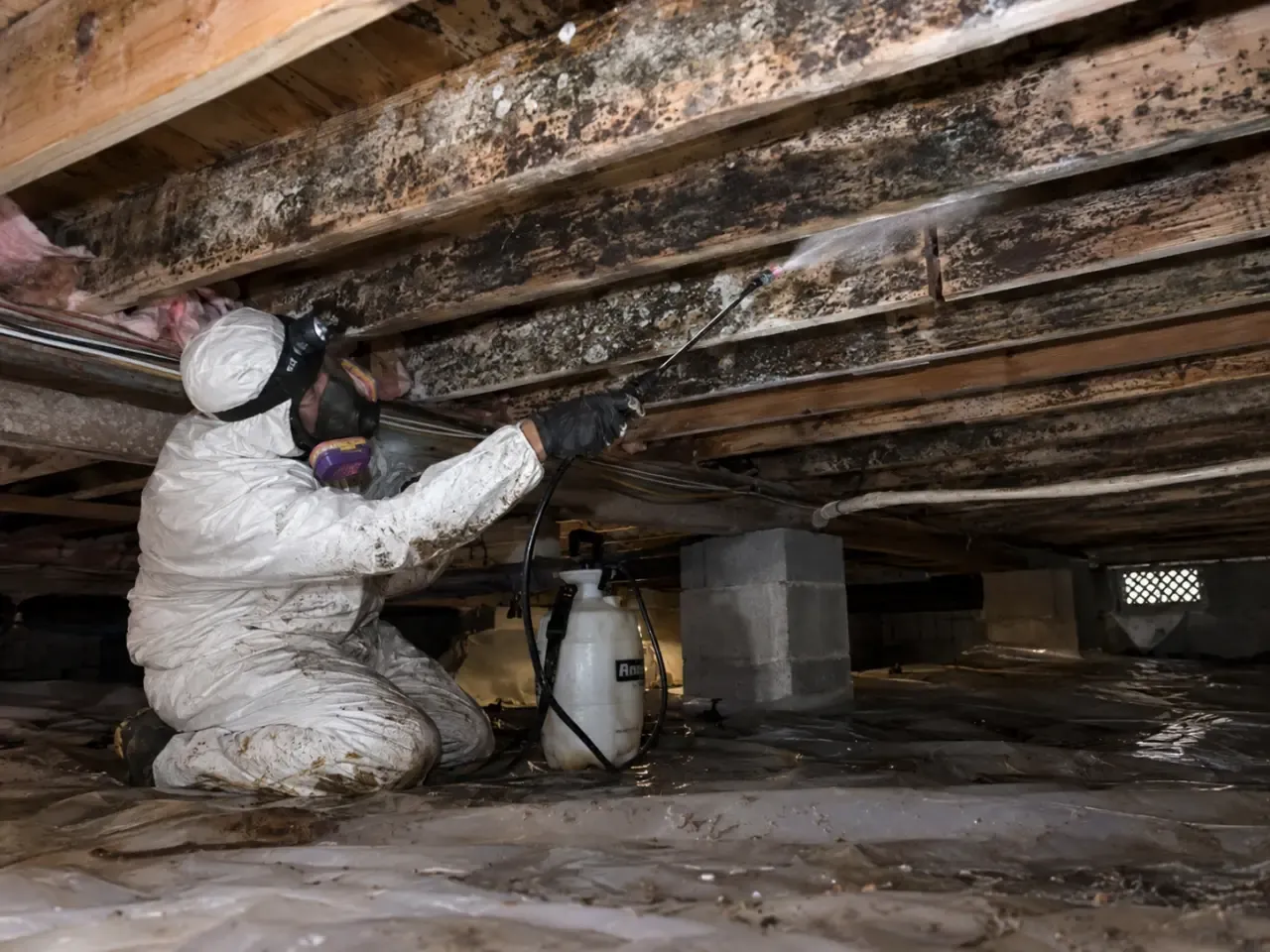
Coastal fog contributes to mold problems in San Luis Obispo homes by keeping exterior surfaces, crawlspaces, and wall cavities at or near condensation humidity for weeks at a time - not just overnight. When the marine layer parks over the city and indoor relative humidity sits above 60% for more than 48 hours, mold spores that are already in your dust and on your framing can colonize drywall paper, baseboards, and window trim. Coastal fog and mold in San Luis Obispo homes are linked by one measurable variable: sustained moisture, not a single wet morning.
We run mold calls across the city every week, and the pattern is almost always the same - a homeowner notices a musty smell in a back bedroom, pulls a dresser away from the wall, and finds a bloom of dark spotting that was not there in July. Below, we break down what fog actually does to a house, where it shows up first, and how to shut it down before it spreads.
What Coastal Fog Actually Does to a San Luis Obispo House
Coastal fog raises the dew point around your home's exterior and pushes moisture into every gap it can find. San Luis Obispo sits in a coastal valley where the marine layer rolls in from Morro Bay and Los Osos most evenings, often between 8 p.m. and 10 a.m., and burns off later than it does five miles inland. That daily cycle means the north and west walls of your house - the sides that face the ocean - stay wet on the outside far longer than the south and east walls.
Fog moisture does not need a rainstorm to get inside. It moves through three routes:
- Vapor diffusion through stucco, wood siding, and unsealed penetrations around hose bibs and dryer vents.
- Stack effect, where warm air rising through your attic pulls damp outside air in through the crawlspace and lower wall gaps.
- Open windows and doors during cool evenings, which feel great in August and load your interior air with 85%+ humidity by morning.
Once that moisture is inside, it does not leave on its own. A 1,500-square-foot San Luis Obispo home can hold 8 to 12 gallons of water vapor in its air and building materials on a heavy fog week. That is the fuel mold needs.
Why San Luis Obispo Homes Feel Damp During Foggy Weather
San Luis Obispo homes feel damp during foggy weather because the outdoor air is already near saturation, so your indoor air has nowhere to dump its moisture. When outside humidity is 90% and your indoor air is 65%, opening a window does not dry the house - it wets it. Your HVAC system, if it is running, has to work against that gradient.
There are local factors that make this worse than it sounds:
- Older housing stock. A large share of homes in Downtown San Luis Obispo were built before 1970 with single-pane windows, no vapor barrier under the crawlspace, and paper-faced drywall that mold loves.
- Crawlspaces. Vented crawlspaces under homes in Laguna Lake pull ground moisture up into the floor system year-round. Fog weeks push the relative humidity in those crawlspaces past 80%.
- Coastal-facing walls. Homes on the west side of the city take the marine layer head-on. The inside face of those walls runs 5 to 8°F cooler than interior air, which is exactly the condition that produces condensation on drywall and framing.
You will notice it first as a cold, clammy feel in a back bedroom, a bathroom that never fully dries, or towels that stay damp for two days. That is your house telling you the moisture balance has tipped.
Where Fog-Driven Mold Shows Up First
Fog-driven mold in San Luis Obispo homes shows up first on the coldest, least-ventilated surfaces - usually the north and west exterior walls, then the floor system above a vented crawlspace. We find it in the same five places on almost every inspection.
- Exterior wall corners behind beds, dressers, and bookcases. Air circulation is poor and the wall is cold.
- Window sills and trim on single-pane windows, especially in bedrooms where the door stays closed.
- Baseboards and carpet tack strips along exterior walls, where condensation drips down and soaks into the carpet pad.
- Crawlspace joists and subfloor above vented foundations, which is the most common hidden reservoir we find.
- Bathroom ceilings and closets that share a wall with the exterior - the classic fog-plus-shower combination.
If you pull a piece of furniture away from an exterior wall and see gray or black speckling on the paint or drywall paper, that is not dirt. That is mold growth that started during a fog stretch and has been quietly expanding since.
Signs of Moisture-Related Mold in San Luis Obispo Homes
Signs of moisture-related mold in San Luis Obispo homes are usually smell-first, visible-second. Your nose picks up the musty odor - often described as wet cardboard or old books - weeks before you see anything.
Watch for these:
- A musty smell that is strongest in one room or one closet, especially in the morning.
- Condensation on the inside of windows that stays past 9 a.m.
- Paint or drywall that feels cool and slightly soft to the touch on an exterior wall.
- Dark speckling along baseboards, window trim, or the bottom of drywall.
- Carpet that feels damp near an exterior wall even when it has not rained.
- Allergy-type symptoms - sneezing, itchy eyes, congestion - that improve when you leave the house for a few days.
Any two of those together is enough reason to get a professional opinion. We handle Mold Inspection San Luis Obispo CA calls for exactly this situation, and the inspection tells you whether you are looking at surface growth you can clean or a reservoir inside the wall or crawlspace that needs real remediation.
How to Reduce Indoor Humidity During Coastal Fog
You reduce indoor humidity during coastal fog by keeping windows closed when outdoor humidity is above 70%, running ventilation at the source, and using a dehumidifier sized for the square footage you are trying to dry. The goal is to hold indoor relative humidity between 30% and 50% - above 60% is where mold growth accelerates.
Here is what actually works in a San Luis Obispo house:
- Close the windows at night. The cool evening air feels good, but it is the wettest air of the day. Run a fan or your HVAC instead.
- Run bathroom and kitchen exhaust fans for 20 minutes after use. Not five. Twenty. That is how long it takes to clear the moisture load from a shower or a pot of pasta.
- Use a dehumidifier with a setpoint. A 50-pint unit handles roughly 1,000 square feet. Empty it daily or plumb the drain - a full tank does nothing.
- Keep interior doors open. Closed bedrooms and closets become moisture traps. Airflow is free mold prevention.
- Check your crawlspace. If the soil under the house is damp and the vents are blocked by landscaping, you are feeding mold from below.
- Run the HVAC fan, not just the AC. Continuous air movement evens out temperature and prevents cold spots where condensation forms.
If you want this handled as a system rather than a set of habits, our Mold Prevention and Moisture Control San Luis Obispo CA service is built around exactly this problem - we measure the moisture sources, fix the airflow, and set the house up so fog season does not turn into mold season.
Common Mistakes That Make Fog-Related Mold Worse
The biggest mistake we see is treating fog-related mold as a cleaning problem instead of a moisture problem. Bleach spray on a baseboard kills the surface growth and leaves the reservoir behind the drywall untouched. Two weeks later it is back.
Other mistakes that cost homeowners money:
- Opening windows to "air out" the house during fog. You are importing moisture, not removing it.
- Running a small dehumidifier in a big room. A 20-pint unit in a 1,200-square-foot open floor plan will not move the needle.
- Painting over moldy drywall. The paint traps moisture and the mold eats through the finish.
- Ignoring the crawlspace. If the mold is on the floor system, cleaning the room above does nothing.
- Waiting until spring. Fog season in San Luis Obispo runs strongest from late summer through fall. By spring, a small bloom has had six months to spread.
If you are seeing black spotting rather than light surface growth, that is a different conversation. We handle Black Mold Removal San Luis Obispo CA for the species that produce mycotoxins and need containment, HEPA filtration, and proper disposal - not a spray bottle.
When to Call a Professional
Call a professional when you can smell mold in a room you cannot see it in, when growth covers more than about 10 square feet, or when the affected area sits above a crawlspace or inside a wall cavity. Those three conditions mean the reservoir is bigger than the visible patch.
We also get calls from homeowners who have already tried cleaning and watched it come back within a month. That is the clearest signal that the moisture source was never addressed. Our team finds the source, contains the affected area, removes the growth, dries the structure, and verifies the repair with moisture readings before we close it up. If you are dealing with a rental, a commercial space, or a multi-unit building, we also run Commercial Mold Remediation San Luis Obispo CA with the same process and documentation.
For most single-family homes, the right first step is a Residential Mold Remediation San Luis Obispo CA assessment - we walk the house, check the crawlspace, take moisture readings, and tell you plainly whether you need remediation or just better humidity control.
Frequently Asked Questions
Can coastal fog cause mold inside a home?
Yes. Coastal fog raises outdoor humidity above 80% for hours at a time, and that moisture migrates indoors through walls, crawlspaces, and open windows. If indoor relative humidity stays above 60% for 48 hours or more, mold can begin colonizing drywall paper, trim, and carpet.
Why do San Luis Obispo homes feel damp during foggy weather?
Because the outdoor air is near saturation, your indoor air has nowhere to release its moisture. Homes with vented crawlspaces, single-pane windows, and west-facing walls feel it worst - indoor humidity often climbs 10 to 15 percentage points during a fog stretch.
How can I prevent mold during the coastal fog season?
Keep windows closed when outdoor humidity is above 70%, run exhaust fans for 20 minutes after showers and cooking, and use a dehumidifier sized to the room. Target 30% to 50% indoor relative humidity. Check the crawlspace monthly and keep vents clear.
When should fog-related moisture concerns be inspected?
As soon as you notice a musty smell, condensation that lingers past mid-morning, or dark speckling on an exterior wall. If growth covers more than 10 square feet or sits above a crawlspace, schedule an inspection within a week - mold spreads faster than most homeowners expect.
Does opening windows during fog help or hurt?
It hurts. When outdoor humidity is above 70%, opening windows imports moisture instead of removing it. Run your HVAC fan or a dehumidifier during fog and save open-window ventilation for dry, warm afternoons when outdoor humidity drops below 60%.
Get Help with Mold Remediation in San Luis Obispo
If fog season has left your San Luis Obispo home smelling musty or showing growth on exterior walls, we can find the source and fix it properly. Call San Luis Mold Pros at (805) 507-9326 and we will schedule an assessment, walk the house with you, and give you a straight answer on what it takes to make it dry again.