Residential Mold Remediation
Residential Mold Remediation in San Luis Obispo That Ends the Rebound
Residential Mold Remediation in San Luis Obispo is the containment, removal and drying work that clears mold growth from your home and keeps it from coming back. We handle single-room bathroom growth and whole-house black mold contamination alike. If you have spotted dark staining near a window, smelled a musty odor in a hallway, or watched a small leak turn into a soft baseboard, we can help. We are licensed, insured and reach most of the city same day.
Service overview
What Residential Mold Remediation in San Luis Obispo Actually Involves
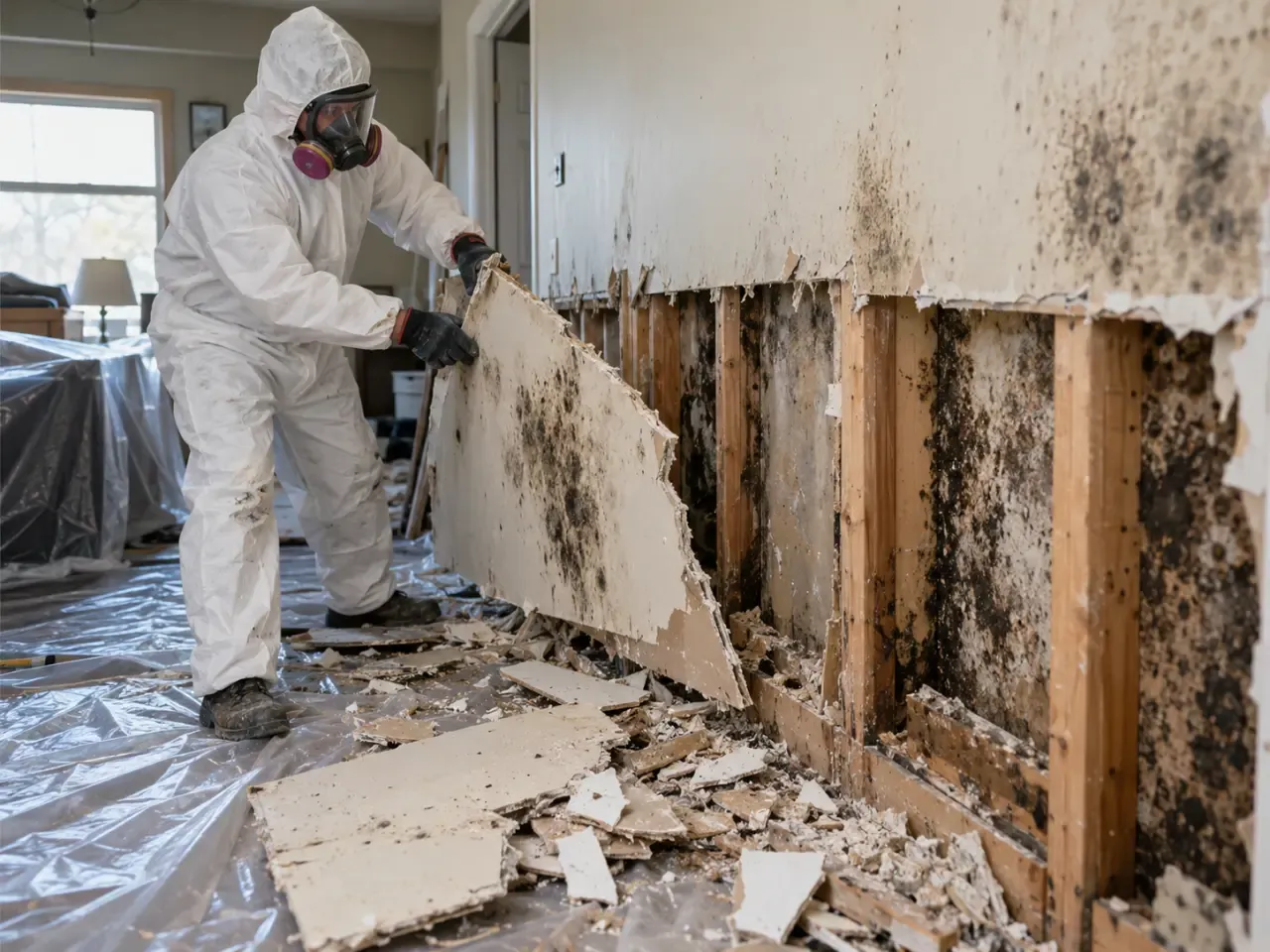
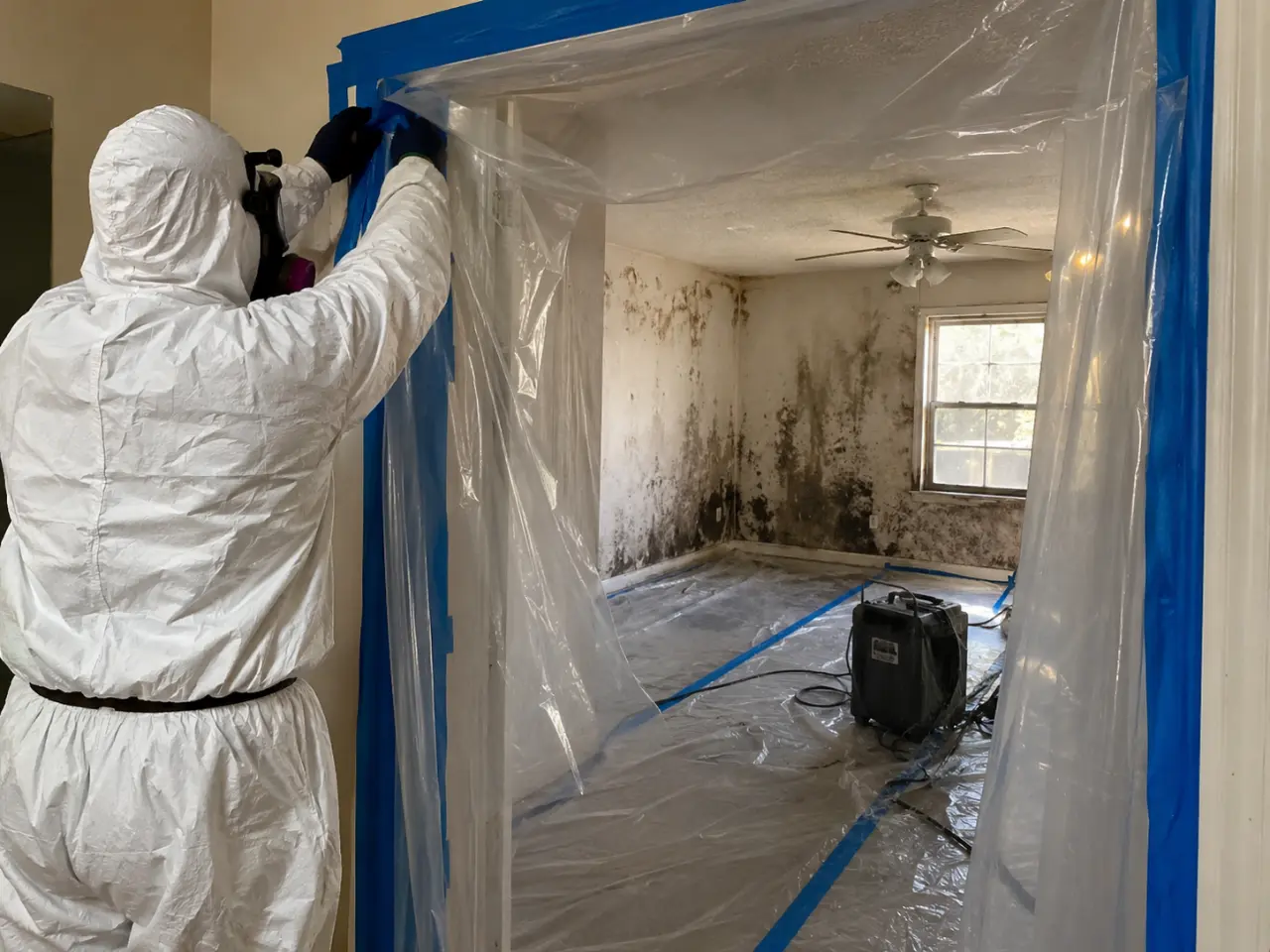
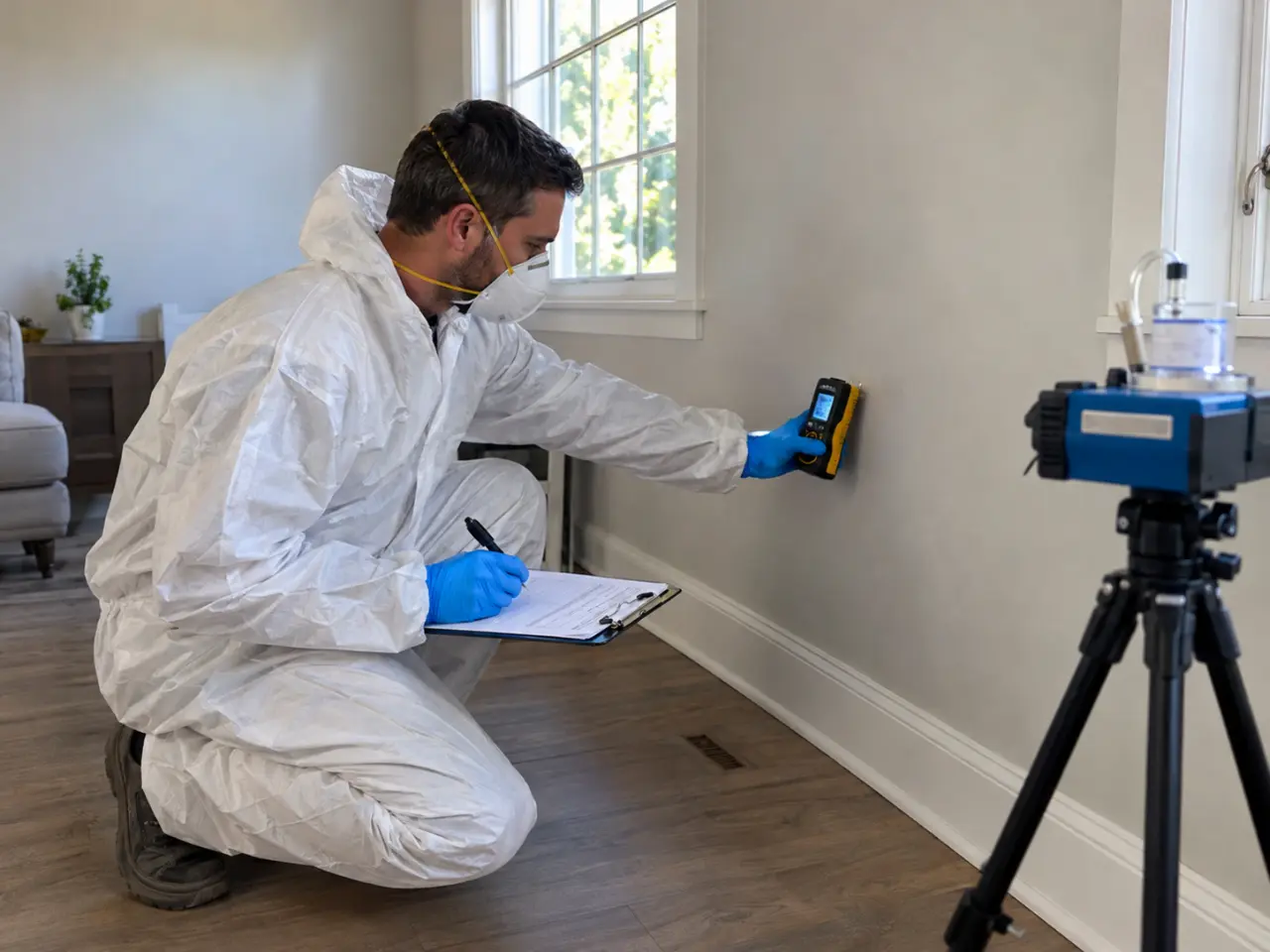
Residential Mold Remediation in San Luis Obispo is a controlled demolition and drying process, not a bleach wipe-down. We seal the work area with polyethylene containment sheeting, run a negative air machine so spores travel out through a HEPA filter instead of into your living room, then remove porous materials that cannot be saved. A moisture meter and infrared thermal camera tell us how far the water traveled behind the wall before we ever cut. Everything gets documented, dried and verified before containment comes down.
San Luis Obispo homes deal with a specific pattern: cool, damp coastal air from October through May, older plaster and lath in Downtown and Railroad District houses, and condensation on single-pane windows that soaks drywall edges all winter. A slow supply-line drip behind a kitchen cabinet can feed hidden mold growth for weeks before you smell it. That is why home mold remediation San Luis Obispo crews treat every call as a moisture problem first and a mold problem second. Find the water, stop it, dry the structure, then remove what is contaminated.
Practical benefits
Why Homeowners Call Us Instead of Chasing It Themselves
Store-bought sprays kill surface staining and leave the colony behind the drywall untouched. These four outcomes are what a proper scope delivers.
Verified Dry, Not Just Dry-Looking
We do not call a job finished because the wall feels dry to the hand. A Protimeter moisture meter and a hygrometer confirm framing, drywall and subfloor are back inside normal range, usually within 3 to 5 days of drying. If readings are still elevated, the equipment stays. That final number is what keeps mold from returning next rainy season.
Air Quality You Can Actually Measure
Before and after every job we run an air sampling pump to capture spore counts, so you are not guessing whether the air in your bedroom improved. HEPA air scrubbers run continuously through the work, and we compare pre- and post-remediation samples. It is the difference between a clean-looking room and a documented one.
Containment That Protects the Rest of the House
Cutting into moldy drywall releases spores. We build negative-pressure containment with 6-mil polyethylene sheeting and negative-pressure ducting so the rest of your home stays out of the dust path. Bedrooms, kitchens and closets outside the work zone stay usable in most single-room jobs, which matters when the family is still living there.
Work That Matches the S520 Standard
We follow the ANSI/IICRC S520 Standard for Professional Mold Remediation on every residential job, from a 12-square-foot bathroom corner to a full basement. That means defined containment, defined removal, defined verification. It also means the paperwork holds up if you sell the house or file an insurance claim later.
How service works
How Our Residential Mold Remediation Process Runs
Five stages, from the first phone call to the final clearance reading. Most single-room jobs finish in one to three days; larger losses take longer.
STEP 01
Inspection and Moisture Mapping
We walk the house with a moisture meter, hygrometer and FLIR infrared thermal camera to find where water is still present and how far it spread. You get a written scope the same day in most cases, with photos of what we found. Expect 45 to 90 minutes on site for a typical home.
Tools and methods
Equipment and Standards We Work To
FLIR Infrared Thermal Camera
Reveals temperature differences behind walls and under floors that point to trapped moisture you cannot see or smell yet.
Protimeter Moisture Meter and Hygrometer
Gives us hard numbers on framing, drywall and subfloor moisture content plus indoor relative humidity, so drying has a measurable endpoint.
Dri-Eaz and Phoenix Restoration Equipment LGR Dehumidifiers
Low-grain refrigerant units pull moisture out of wall cavities and subfloor assemblies fast, even in cool coastal conditions.
XPOWER Air Movers
Directed airflow across wet surfaces speeds evaporation so dehumidifiers can capture the moisture instead of it soaking deeper.
HEPA Air Scrubber and HEPA Vacuum
Captures airborne spores and fine dust during removal and cleanup, keeping the rest of the house out of the contamination path.
Air Sampling Pump
Collects pre- and post-remediation spore samples so clearance is documented with numbers rather than a visual guess.
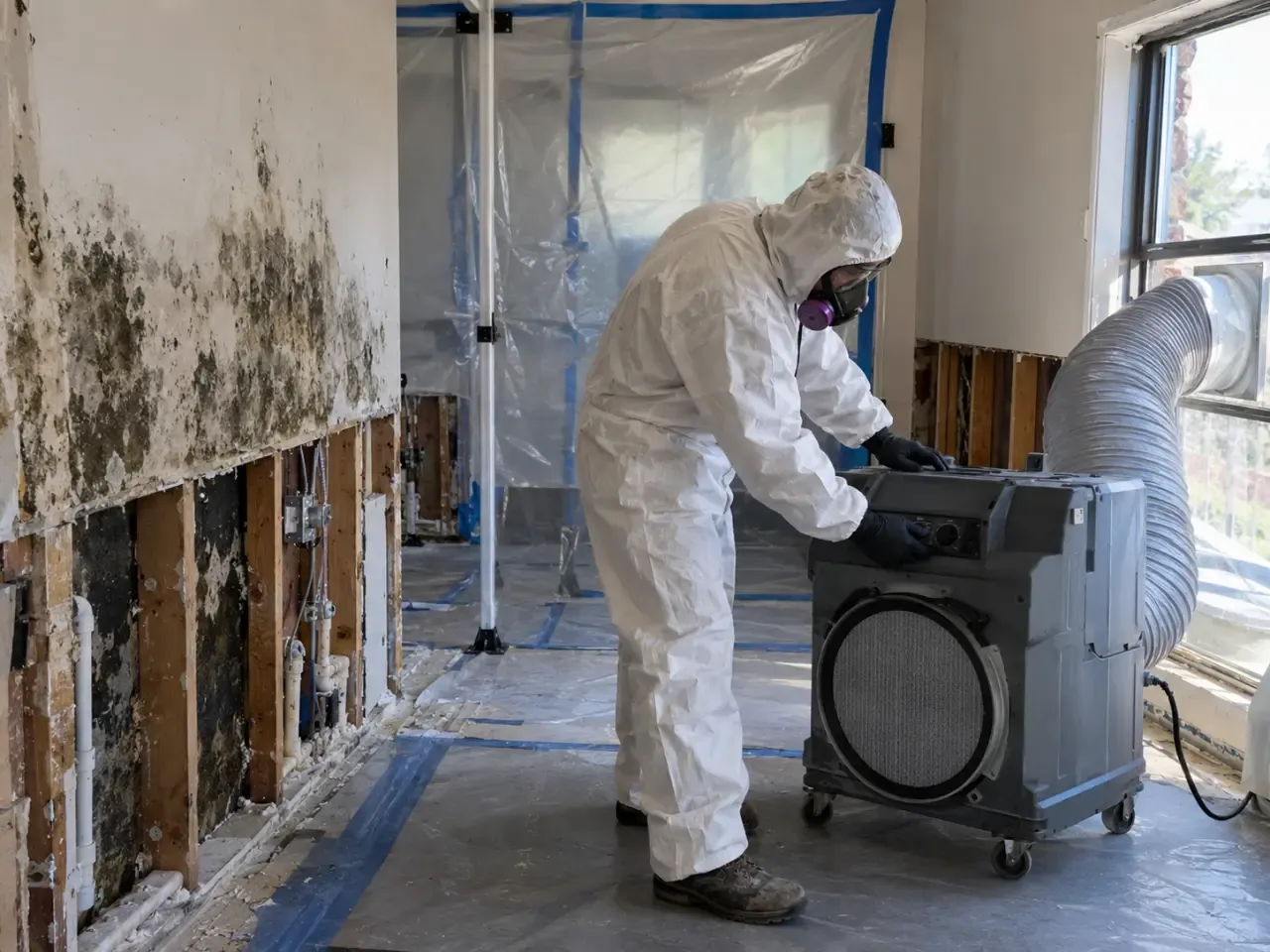
Negative Air Machine with Negative-Pressure Ducting
Maintains negative pressure inside containment so air flows in, not out, protecting clean rooms during demolition.
ANSI/IICRC S520 Standard for Professional Mold Remediation
The industry standard we follow for containment, removal, cleaning and verification on every residential job. It defines when material must be removed versus cleaned and how clearance is confirmed.
OSHA Respiratory Protection Requirements
Technicians wear P100 respirator filters and appropriate protective equipment whenever they work inside containment. This protects our crew and prevents cross-contamination between rooms.
EPA Renovation, Repair and Painting Rule
When remediation disturbs painted surfaces in pre-1978 homes, we follow EPA RRP lead-safe work practices. Common in older Downtown and Railroad District houses with original plaster and trim.
Containment and Negative Pressure Protocol
Polyethylene containment sheeting, sealed doorways and continuous negative pressure keep spores inside the work zone. We build it even on small jobs because cutting moldy drywall always releases particles.
Where this service fits
When San Luis Obispo Homeowners Call Us
A supply line under the kitchen sink drips for two weeks before anyone notices the swollen cabinet base.
We contain the cabinet run, remove the soaked base and any moldy drywall behind it, HEPA vacuum the framing and set LGR dehumidifiers with air movers for 3 to 4 days. Daily moisture readings confirm the wall cavity is back to dry standard. Cabinet base and wall rebuilt with mold-resistant drywall, no musty odor, and a clearance air sample that documents the room is clean.
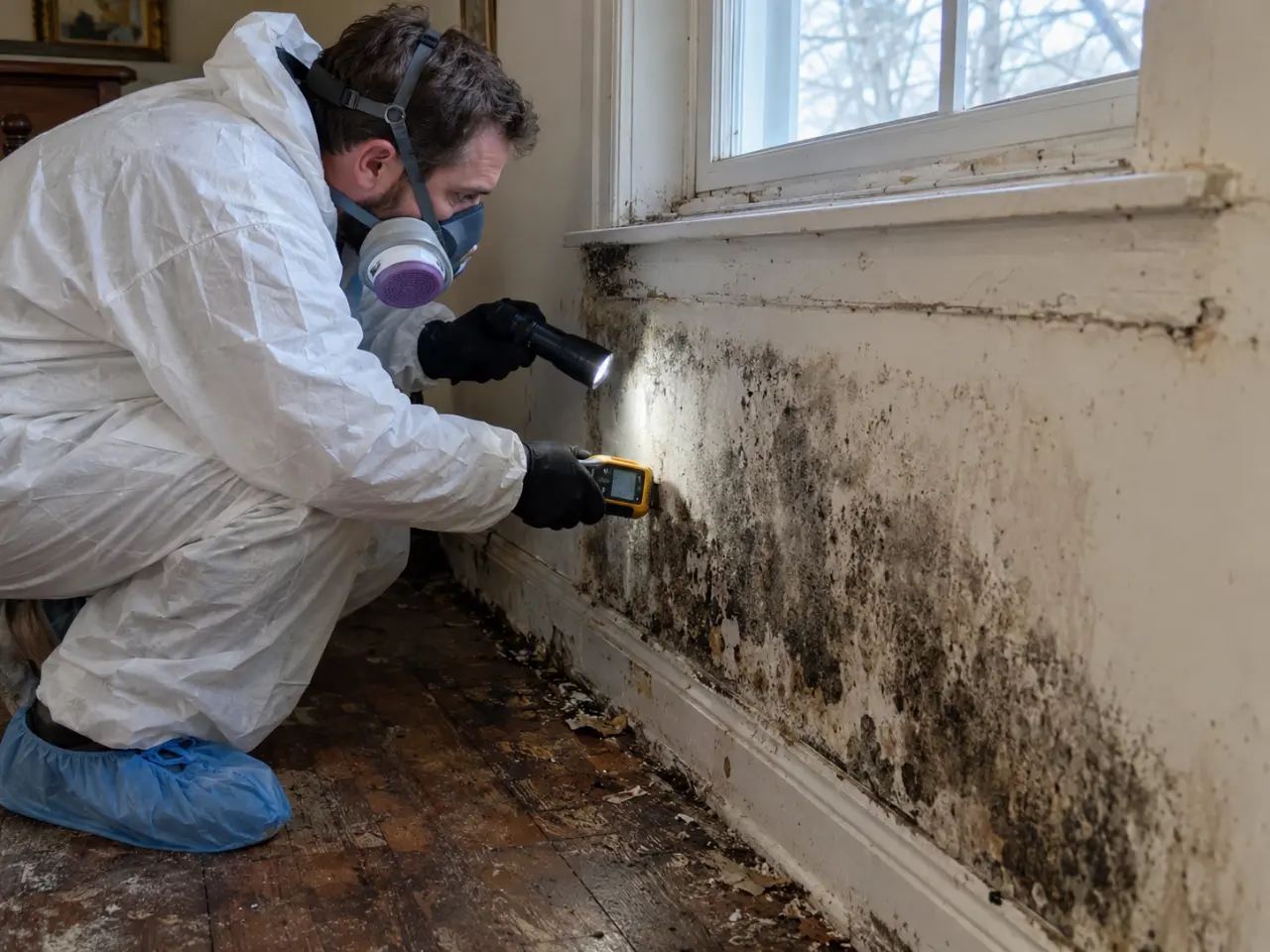
Winter condensation on single-pane windows in a Railroad District house leaves dark staining along the sills and lower wall.
We map the moisture with an infrared thermal camera, remove the affected plaster and drywall section, treat the framing with an antimicrobial cleaner and dry the cavity. We also flag the ventilation and humidity issues causing the condensation. Staining gone, wall cavity dry, and a prevention plan that keeps the same sills from turning green next winter.
A washing machine supply line fails overnight and soaks the laundry room floor and hallway closet carpet.
We extract standing water, pull wet carpet and pad, contain the closet, remove moldy drywall at the base and run structural drying for about 5 days. Air sampling confirms clearance before we rebuild. Dry subfloor, clean closet, new baseboard and paint, and a documented clearance report for the insurance claim.
A homeowner finds mold behind a bathroom vanity during a remodel and wants to know if the rest of the wall is affected.
We inspect with a moisture meter and thermal camera, determine the growth is limited to the vanity alcove, contain the area, remove the affected drywall and treat the framing. No whole-room demolition needed. Remodel stays on schedule, only 16 square feet of drywall replaced, and the homeowner has written documentation for the contractor.
Local execution
How Residential Mold Remediation Runs in San Luis Obispo
San Luis Obispo sits in a coastal fog belt, and that shapes nearly every mold job we run. From October through May, cool damp air and morning marine layer keep exterior walls and single-pane windows cold enough to condense moisture indoors. Older Downtown and Railroad District homes with plaster and lath hold that moisture longer than modern drywall, so hidden mold growth often sits inside wall cavities for weeks before anyone smells it. Homes near Laguna Lake and along the Broad Street corridor deal with the same pattern plus occasional groundwater wicking into crawlspaces. We adjust drying plans for it: longer dehumidifier runs, crawlspace vapor barrier checks and humidity targets lower than what inland contractors use. If you are comparing residential mold remediation San Luis Obispo CA cost, remember that drying time is the biggest variable here, not demolition. We log moisture readings daily and do not pull equipment until framing hits dry standard, because mold recurrence after incomplete drying is the most common failure we get called back to fix.
Downtown San Luis Obispo
Plaster and lath construction in older homes holds moisture longer than drywall, so we extend drying time and check wall cavities with a thermal camera before closing anything up.
Laguna Lake
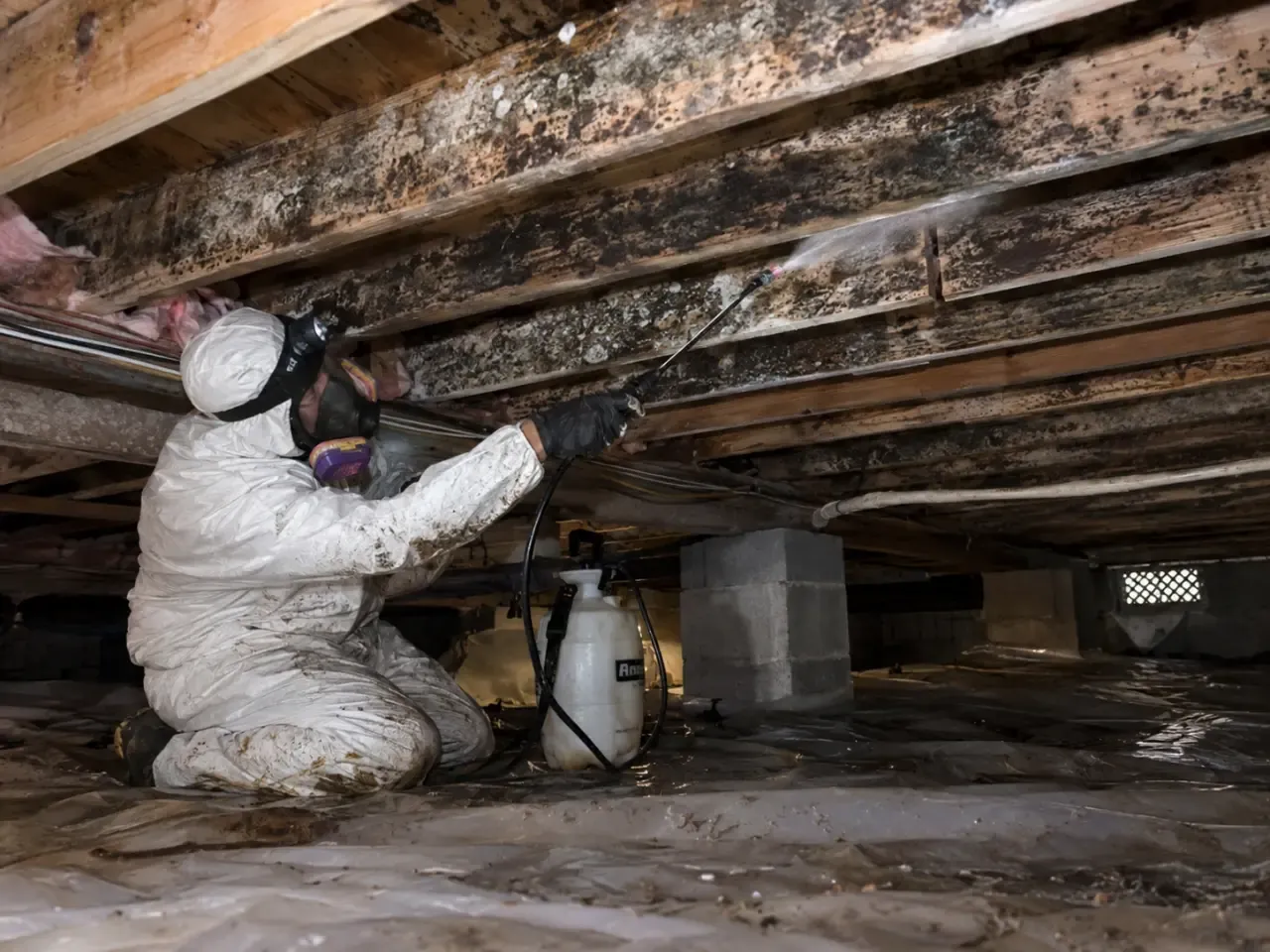
Crawlspaces here see seasonal groundwater wicking. We check for vapor barrier gaps and elevated subfloor moisture before signing off on a remediation.
Railroad District
Original single-pane windows drive winter condensation on sills and baseboards. We treat the growth and flag the ventilation fixes that stop it returning.
Foothill
Larger lots and mature landscaping mean roof and irrigation leaks that go unnoticed. Infrared scanning finds the wet framing behind finished walls.
Sinsheimer
Mid-century homes with original bathroom ventilation often show recurring mold at ceiling corners. We remediate and recommend exhaust upgrades to break the cycle.
Coastal fog and high winter humidity
Interior surfaces stay damp longer, so we run dehumidifiers for 3 to 5 days instead of the 2 to 3 days typical of drier inland climates. Humidity targets are set lower to compensate.
Older plaster and lath construction
Plaster releases moisture slowly, so moisture meter readings can look acceptable while the cavity behind is still wet. We verify with a thermal camera before removing containment.
Single-pane windows in pre-1970 homes
Condensation along sills feeds recurring surface growth. We treat it and recommend ventilation or glazing fixes so remediation is not a yearly event.
Crawlspace groundwater in low-lying neighborhoods
Persistent soil moisture drives elevated indoor humidity and subfloor growth. A properly installed vapor barrier is often part of the fix, not an optional add-on.
Problems we solve
Mold Problems We Solve in San Luis Obispo Homes
Most calls come down to one of these four situations. Each one has a different fix, and guessing wrong is how mold comes back.
Musty odor with no visible staining
We use a moisture meter and infrared thermal camera to trace the odor to its source, open the smallest area needed to confirm growth, then contain and remove it. Air sampling before and after proves the fix worked. A persistent smell usually means hidden mold growth inside a wall cavity, under flooring or above a ceiling. Ignoring it lets the colony spread and eventually damages framing and insulation.
Black mold contamination after a roof or plumbing leak
We stop the moisture source first, build negative-pressure containment, remove contaminated porous material and HEPA vacuum the framing. An antimicrobial cleaner goes on the structure, then we dry and verify with post-remediation sampling. Black mold on drywall and framing spreads fast when the leak is still active. Left alone, it compromises the structural material and can trigger allergies and respiratory irritation for everyone in the house.
Mold keeps returning after a DIY cleanup
We find the water the first cleanup missed, dry the structure to a measured standard and remove material that cannot be saved. Then we address the cause, whether that is a crawlspace vapor barrier, a bathroom exhaust fan or a window condensation problem. Surface sprays kill what you can see but leave the colony and the moisture behind. Mold recurrence after incomplete drying is the single most common reason people call us a second time.
Elevated indoor humidity and window condensation
We measure indoor humidity with a hygrometer, identify the cold surfaces driving condensation and treat any growth that has started. Then we set up dehumidification and ventilation recommendations that keep interior humidity in a range mold cannot use. San Luis Obispo's cool coastal air condenses on single-pane glass and cold exterior walls all winter. That film of water feeds mold along sills, baseboards and closet corners without any obvious leak.
A practical standard for every visit.
Clear planningPrepared arrivalsCareful workLocal follow-through
Experience in the details
Six Years of Mold Work on the Central Coast
San Luis Mold Pros has been remediating Central Coast homes since 2020, and in six years we have learned exactly how this climate behaves. Our technicians hold IICRC Applied Microbial Remediation Technician and IICRC Water Damage Restoration Technician credentials, and we work to the ANSI/IICRC S520 Standard for Professional Mold Remediation on every job. That means we treat mold as a moisture problem with a documented drying endpoint, not a stain to paint over. We are a licensed California contractor, fully insured, and we carry the ACAC Council-certified Microbial Remediator training on staff. When we say a room is dry, we can show you the readings that prove it.
Where we work
One local team. A lot of ground covered.
Laguna LakeSinsheimerJohnson AvenueFoothillMadonnaDowntown San Luis ObispoRailroad DistrictBroad Street
Check my address Most single-room residential mold remediation San Luis Obispo CA cost falls between $1,200 and $3,500 in 2026, and whole-house jobs with reconstruction can run $6,000 to $18,000. Square footage of contaminated material, whether insulation and drywall come out, and how long drying takes drive the number. Air sampling and rebuild add cost. We give you a written scope with the price before any containment goes up.
San Luis Mold Pros provides residential mold removal near me San Luis Obispo homeowners can schedule same day, covering Downtown, Laguna Lake, Sinsheimer, Foothill, Madonna, Johnson Avenue, Railroad District and Broad Street. We handle containment, HEPA vacuuming, antimicrobial treatment, structural drying and verification. Call (805) 507-9326 and we will tell you honestly whether you need a full remediation scope or just a moisture fix.
A single bathroom or closet typically takes 1 to 3 days for removal, then 3 to 5 days of drying before clearance sampling. Larger losses, like a flooded basement or mold behind kitchen cabinets, run 7 to 14 days including rebuild. The drying stage sets the timeline, not the demolition. We check moisture readings daily and do not pull equipment early.
Yes, when containment and HEPA filtration are done correctly. We isolate the work zone with polyethylene sheeting and negative air pressure, so spores and dust stay inside. Our antimicrobial cleaners are applied to building materials, not left as residue on living surfaces. Keep pets and kids out of the containment area during work, and the rest of the house stays livable in most single-room jobs.
Keep exploring
Other Mold and Moisture Services We Handle
Your next step is waiting
Get Residential Mold Remediation in San Luis Obispo Started Today
We are licensed, insured and reach most San Luis Obispo addresses the same day you call. One visit tells you whether you are looking at surface mildew or hidden mold growth behind the wall. Call (805) 507-9326 and we will map the moisture, explain the scope and give you a price before any work begins.
Start with the basics
Contact San Luis Mold Pros
Call (805) 507-9326 or email info@sanluismoldpros.com and we will get you on the schedule. We answer the phone 24/7 for water intrusion emergencies and return messages within one business hour during the day. Estimates are free and we serve all of San Luis Obispo County.